
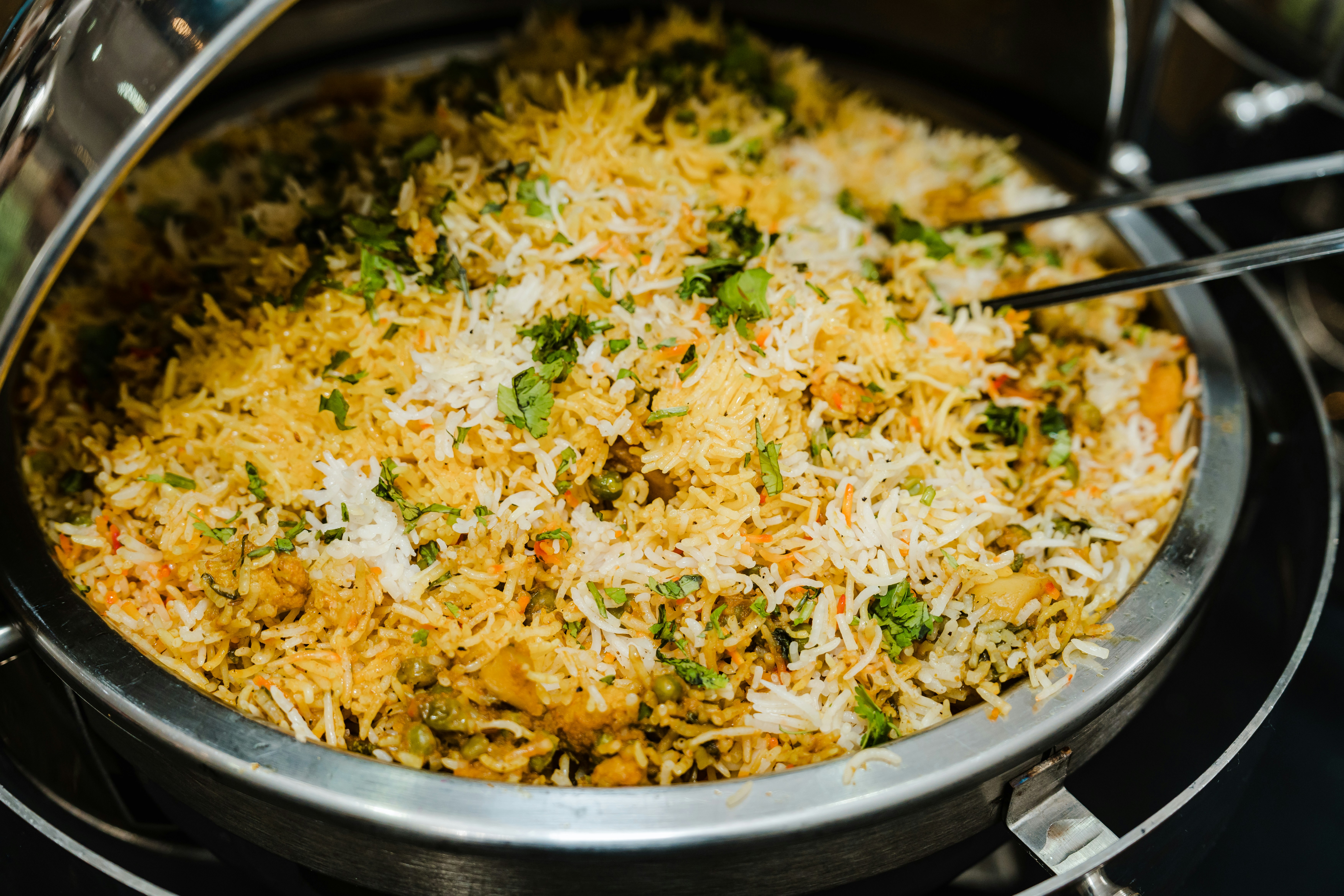
Introduction to Hyderabadi Biryani
Hyderabadi biryani is a dish deeply rooted in the rich history and vibrant culture of Hyderabad, India. Its origins date back to the Nizam era, a time when the cuisine was significantly influenced by the Mughal imperial kitchens. The confluence of these culinary traditions led to the creation of what is now recognized as one of the most iconic Indian dishes.
The preparation of Hyderabadi biryani is an art that represents the historical amalgamation of flavors and techniques. The dish is characterized by the use of basmati rice, marinated meat, and an intricate blend of spices, which contribute to its unique taste. Unlike other regional biryanis, Hyderabadi biryani often involves a layering process, with the rice and meat cooked separately before being assembled in a pot, a method known as “dum cooking.” This technique seals in the essential flavors, allowing for a remarkable depth of taste.
One cannot overlook the cultural significance that Hyderabadi biryani holds for the people of Hyderabad and beyond. Beyond its status as a culinary delight, it has become a symbol of hospitality and celebration, often served at weddings, festivals, and other memorable occasions. Its popularity has transcended regional boundaries, making it a beloved dish not only in India but also internationally. The dish’s evolving presentation and interpretation reflect how Hyderabadi biryani continues to capture the hearts and palates of people around the world.
Moreover, key ingredients such as saffron, mint, and fried onions set Hyderabadi biryani apart from its counterparts. This dish is not merely about sustenance; it is about an experience steeped in history and cultural significance that invites everyone to partake in a rich culinary heritage.
Selecting the Right Ingredients
To achieve authentic Hyderabadi biryani, selecting the right ingredients is crucial, as they significantly impact the flavor and texture of the dish. The primary ingredients include rice, meat—either chicken or mutton—spices, and herbs. Understanding each component and its quality can drastically enhance the final outcome.
The choice of rice is fundamental in making Hyderabadi biryani. Basmati rice is the preferred variety due to its long grains and aromatic qualities. It is essential to select high-quality basmati that is aged, as aged rice tends to have a firmer texture and better absorption properties, ensuring that it cooks perfectly without becoming mushy. The proper rinsing and soaking of the rice before cooking also play a role in achieving the right texture.
Moving on to the meat, traditional Hyderabadi biryani generally employs either chicken or mutton. When selecting meat, it is important to choose cuts that have good fat content, as this contributes to the overall richness of the dish. For chicken, thighs are often recommended due to their juiciness and flavor, whereas for mutton, shoulder cuts are preferred for their tenderness and depth of flavor. The marination of the meat with yogurt and spices not only enhances the taste but also helps in tenderizing the meat, allowing for a burst of flavor with every bite.
Spices and herbs are the soul of Hyderabadi biryani. A carefully curated blend of spices, primarily including cumin, cardamom, cloves, and cinnamon, creates the dish’s signature aroma and flavor. The incorporation of fresh herbs, such as mint and cilantro, elevates the taste profile, adding a refreshing contrast to the richness of the meat and rice. It is recommended to use whole spices whenever possible, as they release their essential oils more effectively than ground spices, leading to a more robust flavor.
Every element in the preparation of Hyderabadi biryani matters, from the selection of the right basmati rice to the quality and type of meat and the careful choice of spices and herbs. Ensuring the ingredients are fresh and at their peak quality will guarantee a rich and authentic biryani experience.
Step-by-Step Cooking Process
Preparing Hyderabadi biryani involves a meticulous cooking process that requires attention to detail. The first step is marinating the meat, which can be either chicken or mutton. For optimal flavor, the meat should be marinated for at least two hours, preferably overnight. A mixture of yogurt, ginger-garlic paste, lemon juice, and a blend of spices such as cumin, coriander, and garam masala is recommended. This marinade not only tenderizes the meat but also infuses it with rich flavors.
While the meat is marinating, the next step is to prepare the rice. Long-grain basmati rice is ideal for this dish due to its fragrant aroma and fluffy texture. Rinse the rice several times until the water runs clear to remove excess starch. Soaking the rice for about 30 minutes before cooking helps in achieving that perfect texture. Once soaked, the rice should be boiled until it is 70% cooked, as it will continue cooking when layered with the meat.
The assembly of the biryani is crucial for achieving the layers of flavor characteristic of this dish. Begin by placing the marinated meat in a heavy-bottom pot, then layer the partially cooked rice on top. For added aroma, sprinkle fried onions, mint leaves, and coriander between layers. A drizzle of saffron-infused milk can also enhance both color and flavor.
The final cooking method, known as ‘dum,’ involves sealing the pot with dough or a tight lid to trap steam, ensuring the rice and meat cook evenly. Low heat is essential, typically around 150-160 degrees Celsius, and the cooking time can vary from 30 minutes to one hour based on the type of meat used. This slow cooking method allows the flavors to meld beautifully.
Timing and temperature control are crucial during this process, so it is advisable to monitor the heat closely to avoid overcooking the biryani. Common mistakes include cooking the rice fully before layering or not sealing the pot properly, which can lead to a dry texture. By following these steps, one can successfully master the art of Hyderabadi biryani.
Serving Suggestions and Accompaniments
Hyderabadi biryani is celebrated not just for its unique flavors but also for its elaborate presentation and accompaniment that enhance the overall dining experience. When serving this iconic dish, it is essential to consider various side dishes, drinks, and desserts that complement its rich taste and aroma.
Traditional accompaniments for Hyderabadi biryani include raita, a yogurt-based side, that helps to balance the spiciness of the biryani with its cool and creamy texture. Common varieties of raita include cucumber, mint, or onion, each bringing a distinct flavor. Fresh salad made with sliced onions, cucumbers, and tomatoes, seasoned lightly with lemon juice, also pairs well, adding a refreshing element to the hearty biryani.
Chutneys, particularly mint or cilantro chutney, are another excellent choice, enhancing the dish’s flavors with their vibrant zest. They can also be served on the side, allowing diners to customize their meal according to their taste preferences. Additionally, pickles can add an extra tangy dimension that complements the biryani perfectly.
For beverages, a chilled glass of buttermilk or a refreshing mint lemonade can quell the heat from the spices and invigorate the palate. Some diners may also opt for sweet lassi, which harmonizes well with the dish while offering a delightful contrast to its savory elements.
The conclusion of a Hyderabadi feast is often marked by a proper dessert. Traditional sweets like kheer or double ka meetha offer a perfect ending with their sweet and rich profiles. The sweet aroma of these desserts resonates with the fragrant tones of biryani, providing a satisfying conclusion to the meal.
When serving biryani, presentation plays a crucial role. A visually appealing display can significantly enhance the dining experience. Consider garnishing the biryani with fried onions, fresh herbs, and a sprinkle of saffron strands to invigorate both the colors and aromas of the dish. Serving it in a traditional handi adds an authentic touch that can impress guests, making the meal not only a delight for the palate but also for the eyes.



Leave a Reply